.gif)

An enterprise AI transformation roadmap is a strategic framework that moves organizations from fragmented pilots to orchestrated, production-grade systems. Early adopters see measurable returns: IDC's 2024 Business Opportunity of AI study found an average return of $3.70 for every dollar invested in generative AI. Success requires clear business outcomes, continuous governance, and reliable agentic architecture.
Enterprise leaders face intense pressure to deliver reliable artificial intelligence systems that reduce costs and improve operations at scale. This guide outlines a structured approach to AI transformation in 2026, focusing on production-ready outcomes rather than fragile prototypes. Top performers in the same IDC study reported an average return of $10.30 per dollar invested.
What is an Enterprise AI Transformation Roadmap?
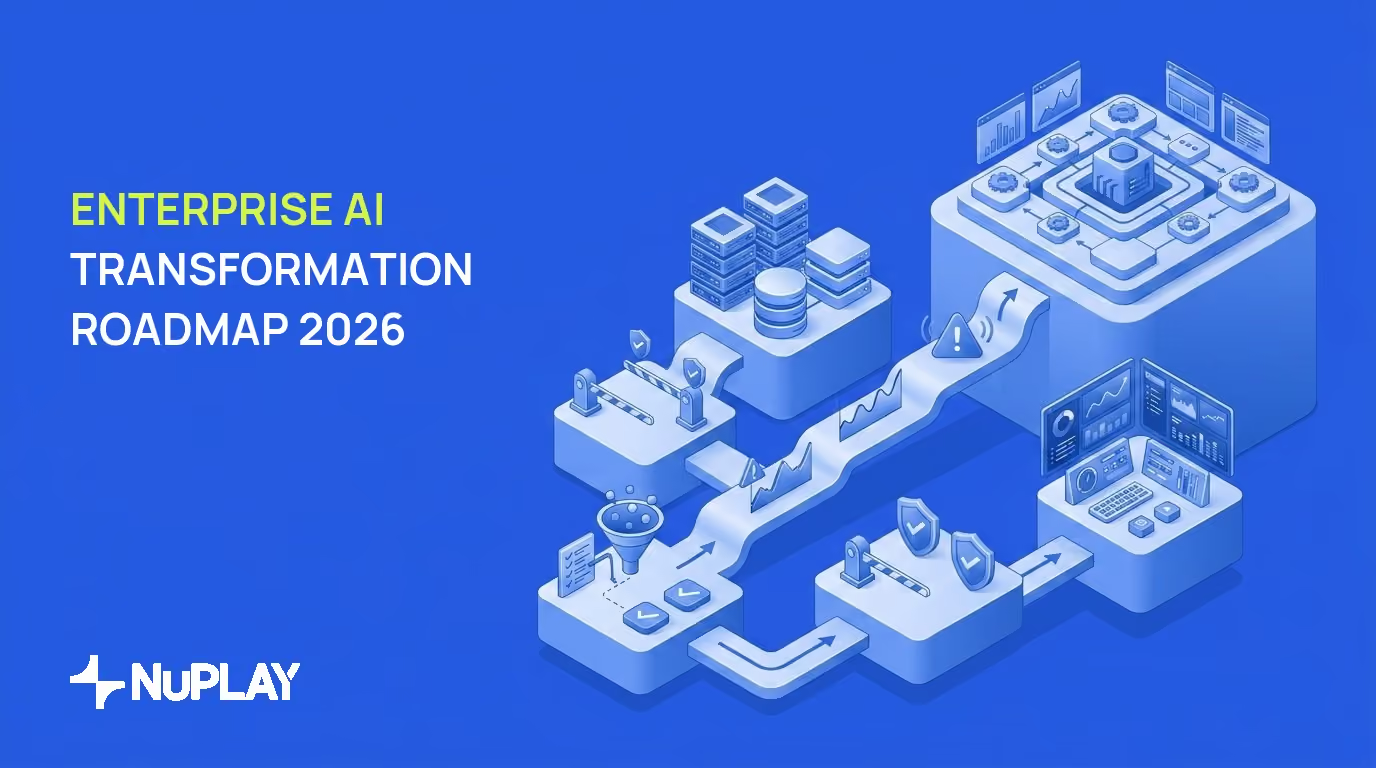
An enterprise AI transformation roadmap is a multi-phased strategic framework that transitions an organization from fragmented AI experimentation to a governed production operating model. It relies on orchestrated agentic workflows, defined approval gates, and observable architecture to execute enterprise work reliably at scale.
Prerequisites for Enterprise AI Transformation
Before building your strategy, your organization must assess its fundamental readiness. You need strong information technology (IT) infrastructure and mature data governance. Without these foundations, automation initiatives amplify existing challenges and create new operational risks.
Define business outcomes tied directly to revenue or cost metrics. Secure executive sponsorship from your Chief Technology Officer (CTO) or Head of AI to ensure alignment across departments. Allocate budget specifically for forward-deployed engineering support. Moving from generic prototypes to production-grade software requires hands-on technical expertise that most internal teams lack.
Finally, prepare your human capital. An IBM Institute for Business Value study of 2,000 chief executive officers found that respondents expect 31% of their workforce to require retraining or reskilling over the next three years. Work redesign shifts human roles from manual task execution to agent orchestration and oversight. You must prepare your teams for this operational shift.
Step 1: Conduct Current State Assessment
The first active phase requires mapping existing workflows to identify high-impact automation opportunities. Audit manual processes across customer support and back-office operations. You must understand exactly where human intervention slows down service delivery or inflates your cost-to-serve.
Evaluate your legacy systems for integration readiness. AI agents need secure access to your Customer Relationship Management (CRM), Enterprise Resource Planning (ERP), and proprietary databases to function. Prioritize use cases in highly regulated environments like retail, insurance, or financial services where manual errors introduce significant risk.
During this assessment phase, NuPlay helps teams identify which tasks and decisions should remain human, follow fixed automation, or move into agent mode. Within the platform, NuStack makes systems agent-ready and orchestrates workflows. Focus on high-volume, high-complexity workflows where the business value justifies the engineering investment.
Step 2: Define Strategic Objectives and Governance
Set measurable goals aligned with customer experience (CX) and operations Key Performance Indicators (KPIs). You must establish strict oversight frameworks before a single agent goes live. Governance can no longer be treated as a static checklist completed once during procurement.
Production systems need continuous technical evidence. They should generate real-time data showing whether each workflow operates within defined security and ethical guardrails.
Design observability and compliance standards from day one. Evaluate standards against the workflow's actual risks, data, access, and regulatory obligations rather than treating one framework as a replacement for all existing security controls. Establish cross-functional teams that include VPs of Engineering, CX leaders, and legal counsel to maintain these standards across all deployments.
Step 3: Select Production-Grade Platforms and Partners
Choosing the right tools determines whether you scale successfully or get stuck in pilot purgatory. Enterprise teams need systems that coordinate specialized agents, fixed automation, and human approval rather than relying on one monolithic model to do everything.
Evaluate NuPlay as one platform for enterprise workflows. NuPro provides task-specific micro-agents, including voice and chat agents; NuStack makes systems agent-ready and orchestrates the workflow; NuContext supplies context; NuLoop governs run-over-run improvement; and NuPulse monitors status, volume, and outcomes.
Partner with vendors offering forward-deployed engineering. Generic Application Programming Interfaces (APIs) are insufficient for complex enterprise environments. Evaluate how each platform handles system integration, approval gates, observability, rollback, and ongoing change before comparing promised returns.
Here is a side-by-side comparison of isolated point solutions versus orchestrated agentic platforms.
Step 4: Build and Deploy Initial Systems
Move from planning to live production environments systematically. Start with governed pilots in specific customer-facing or operations workflows. These initial deployments must operate under the exact security and latency constraints expected in full production.
Implement rigorous testing, monitoring, and rollback procedures. You must track agent decisions, API calls, and system handoffs in real time. When a deployment proves stable, scale it across business units methodically.
Early adopters following a phased approach can produce strong return on investment (ROI). IDC's 2024 study reported an average return of $3.70 per dollar invested in generative AI, while top performers reached $10.30. Buyers should validate expected returns against their own workflows, integration scope, baseline costs, and governance requirements.
Common Mistakes to Avoid
Enterprises frequently stall their own progress by making predictable architectural errors. The most dangerous mistake is scaling untested prototypes directly to production. A script that works perfectly in a sandbox will fail when exposed to variable enterprise data.
Avoid selecting point solutions without deep integration capabilities. This leads to agent sprawl, where unmanaged, isolated AI agents proliferate across different business units. This sprawl creates redundant costs, security gaps, and integration failures that IT teams must eventually clean up.
Do not skip governance and security planning. Organizations that ignore this fall into the post-production control failure trap. Gartner predicts that by 2027, 40% of enterprises will demote or decommission autonomous AI agents due to governance gaps identified only after production incidents occur. "Enterprises are treating AI agent governance as binary, either locked down or fully trusted, and that is the root cause of failure," says Shiva Varma, Senior Director Analyst at Gartner.
Troubleshooting Common Issues
Even with a strong roadmap, teams will encounter friction during deployment. Address data quality gaps immediately with targeted cleansing processes. AI agents cannot make accurate decisions based on outdated or siloed CRM records.
Resolve integration failures through strict architecture reviews. If an agent fails to update a backend system, check the API rate limits and authentication protocols. Sustainable maturity depends on whether enterprises can monitor, trace, and optimize AI agents for performance and cost over the long term.
Mitigate adoption resistance with targeted training programs. Show your teams exactly how agentic workflows remove tedious manual tasks. Assign agents narrow, well-defined roles with explicit permissions, approval gates, and escalation paths. This allows human workers to focus on higher-value oversight and strategy.
Conclusion
Apply this enterprise AI transformation roadmap to build reliable, governed AI systems around measurable business results. The path from pilot to production requires disciplined architecture, continuous governance, and accountable operating ownership. NuPlay runs enterprise workflows in production and improves them after every run through NuLoop, with agents, the systems they operate, and the context they draw on under one platform.