.gif)
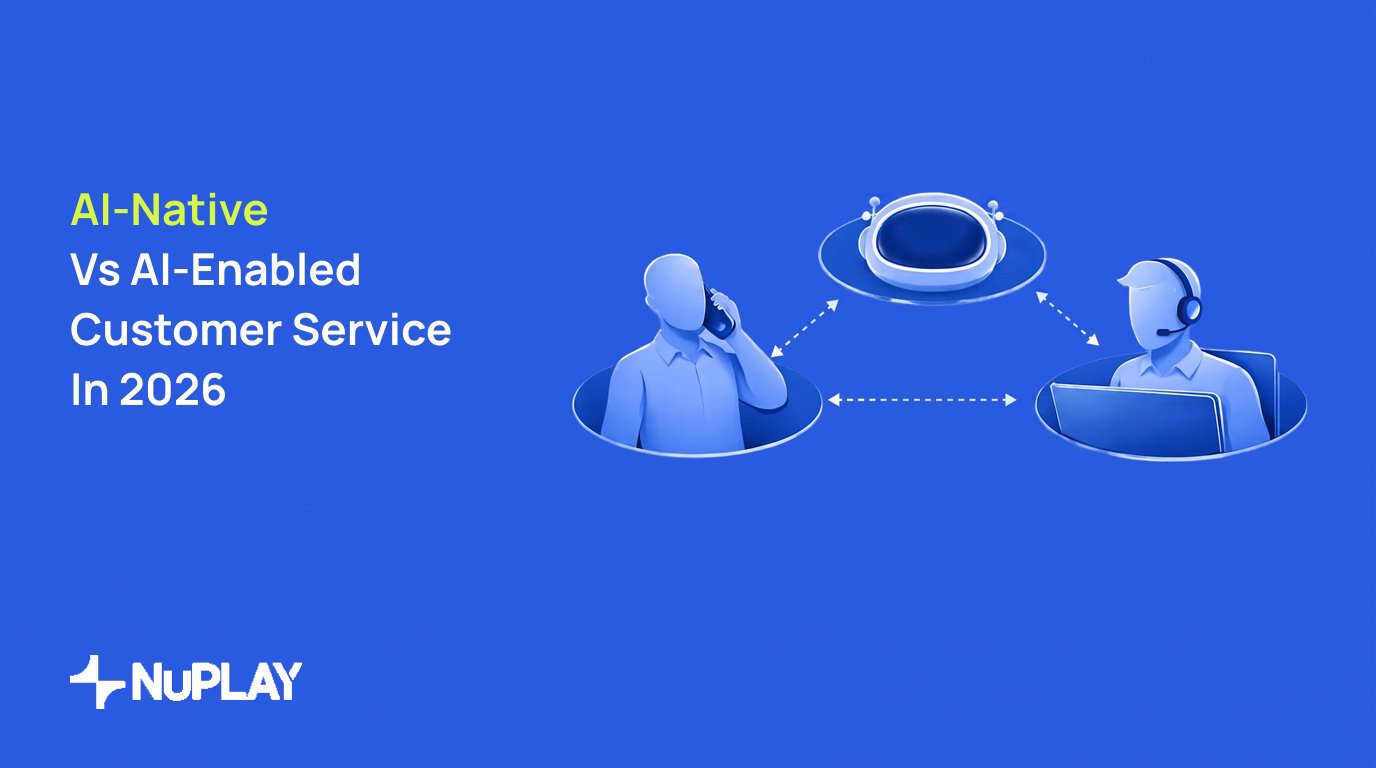

AI-native customer service builds agents into the core orchestration layer from the start, while AI-enabled systems add AI features to platforms designed for human agents. The distinction decides how far the system scales, how it is governed, and whether performance improves or degrades after the first rollout.
Customer service operations face a structural shift in 2026. Enterprises must decide how to structure technology investments for high-volume workflows. Eight architectural differences separate AI-native systems from AI-enabled ones. The top structural priorities for enterprise teams are AI-native architecture for foundational stability, closed-loop feedback systems for continuous improvement, and approve-to-promote governance for compliance.
According to Gartner, 40 percent of enterprise applications will feature task-specific AI agents by the end of 2026. Choosing the right framework determines whether deployments scale or face repeated rework.
Architectural Categories
Market approaches fall into three groups.
Core System Foundations
This group covers the base layer. It defines whether teams build a new system from scratch or attach features to an existing database. The choice sets long-term scalability.
Governance and Improvement Mechanisms
These elements control how a system learns and stays safe. They include feedback loops and approval gates that stop unauthorized changes.
Execution and Measurement Layers
This group covers how work occurs. It includes micro-agents that handle tasks and the metrics used to track efficiency.
What is AI-Native vs AI-Enabled Customer Service?
The distinction rests on the foundation. AI-enabled systems attach artificial intelligence to a legacy platform through plugins or middleware. This offers a quick path to automation but often creates data silos and limits full workflow execution.
AI-native systems place the agent at the center of the orchestration layer. The agent executes the end-to-end workflow, reads the database, makes decisions, and updates records. This structure changes how teams manage, monitor, and improve operations. When business rules change, an AI-native system can adapt its workflow. An AI-enabled system usually requires manual middleware updates.
Research & Evidence
The breakdown draws on market data and research. The push toward native orchestration continues. Research on the Gartner hype cycle for agentic AI shows native systems moving toward mainstream adoption. Legacy providers adapt by adding overlays.
Static deployments carry risks. Studies show structured mitigation and feedback can improve task success rates, according to research on agent drift. Systems must diagnose their own failures. Advanced memory structures help maintain coherence, as noted in computational memory research. The shift toward modular execution appears in reliability evaluations of production systems.
The 8 Core Architectural Differences
1. AI-Native Architecture
What it is: Systems designed from the ground up with agents as the central orchestration layer.
Core Mechanism: Dedicated layers for task execution, multi-tier context management, and real-time monitoring.
Target Audience: Enterprises with high-volume, repeatable workflows in regulated industries.
Primary Advantage: Prevents performance degradation through built-in improvement mechanisms.
Implementation Speed: Requires several months for full integration.
Expected Outcomes: Higher orchestration efficiency and lower long-term maintenance costs.
Market Evidence: Native systems move through the hype cycle toward mainstream adoption.
Why it stands out: The architecture supports integration across backend systems and resolves complex issues automatically.
What to consider: Initial integration investment is substantial and teams must adapt processes.
2. AI-Enabled Architecture
What it is: Integration of artificial intelligence components into existing traditional software.
Core Mechanism: API integrations, middleware, and third-party plugins.
Target Audience: Organizations with large investments in legacy platforms seeking incremental upgrades.
Primary Advantage: Faster time to value with lower upfront costs.
Implementation Speed: Often weeks, depending on existing middleware.
Expected Outcomes: Incremental gains in automation for basic tasks.
Market Evidence: Legacy providers add intelligent overlays to meet demand.
Why it stands out: It provides an accessible entry point while preserving familiar interfaces.
What to consider: Data silos and integration bottlenecks appear at scale.
3. Closed-Loop Feedback Systems
What it is: Platforms that monitor performance and propose targeted improvements.
Core Mechanism: Five stages (Report, Diagnose, Propose, Try, and Ship) to validate updates.
Target Audience: Enterprises in retail, insurance, and financial services needing sustained reliability.
Primary Advantage: Reduces manual maintenance by automating failure detection.
Implementation Speed: Begins at deployment in advanced platforms.
Expected Outcomes: Lower escalation rates and higher return on investment.
Market Evidence: Structured mitigation improves task success rates.
Why it stands out: Updates are validated against past runs before they ship, so improvement never comes at the cost of stability. The NuPlay platform uses NuLoop to drive diagnosis, coverage, and governed change after every run.
What to consider: Reliable observability and clear approval processes are required.
4. Approve-to-Promote Governance
What it is: A control pattern requiring explicit human validation before any workflow update ships.
Core Mechanism: All AI-generated fixes pass through a human review gate.
Target Audience: Enterprise teams in regulated sectors such as healthcare and finance.
Primary Advantage: Guarantees human accountability and prevents compliance violations.
Implementation Speed: Adds review time to each proposed change.
Expected Outcomes: Strict compliance with international standards alongside machine-assisted diagnostics.
Market Evidence: The model aligns with the ISO 42001 standard for artificial intelligence management.
Why it stands out: It balances speed and safety with human judgment.
What to consider: Operations teams need training to evaluate proposals efficiently.
5. Multi-Tier Context Management
What it is: Memory organized across organizational, agent, and user levels.
Core Mechanism: Three tiers that deliver the right data at the right time.
Target Audience: Enterprises running high-volume, multi-channel support.
Primary Advantage: Reduces context loss and supports deeper personalization.
Implementation Speed: Requires upfront data mapping.
Expected Outcomes: Higher first-contact resolution through preserved history.
Market Evidence: Advanced memory structures maintain coherence in generative systems.
Why it stands out: Customers avoid repeating details across sessions.
What to consider: Strict privacy controls are essential at scale.
6. Task-Specific Micro-Agents
What it is: Specialized components for narrow functions within a workflow.
Core Mechanism: Chained narrow agents that pass information and trigger actions.
Target Audience: Enterprises in retail and insurance needing modular automation.
Primary Advantage: Precise control and easier isolation of issues.
Implementation Speed: Allows incremental rollout of individual agents.
Expected Outcomes: Predictable performance and easier compliance proof.
Market Evidence: The shift toward modular execution is documented in production evaluations.
Why it stands out: Updates to one function leave the rest of the system untouched, which keeps testing and rollback scoped to the piece that actually changed. The NuPlay platform structures its execution layer this way.
What to consider: A strong orchestration layer is required to coordinate agents.
7. Agentic Drift Mitigation
What it is: Strategies to prevent gradual performance degradation.
Core Mechanism: Continuous monitoring and closed feedback loops that detect drops early.
Target Audience: Enterprises where even small performance drops carry high cost.
Primary Advantage: Maintains long-term reliability and reduces emergency interventions.
Implementation Speed: Requires ongoing active management.
Expected Outcomes: Lower task failure rates through proactive fixes.
Market Evidence: Structured mitigation counters natural decay in production systems.
Why it stands out: The system flags drift internally before it reaches customers.
What to consider: Real-time data infrastructure increases initial complexity.
8. Orchestration Efficiency Metrics
What it is: Measures of multi-agent system effectiveness.
Core Mechanism: Ratio of successful completions to compute resources consumed.
Target Audience: Enterprise AI and finance teams justifying infrastructure spend.
Primary Advantage: Quantifiable optimization of costs and hidden inefficiencies.
Implementation Speed: Can begin immediately with outcome dashboards.
Expected Outcomes: Improved return on investment through elimination of unnecessary spend.
Market Evidence: Tracking these ratios is becoming standard for taming agent sprawl.
Why it stands out: It focuses on actual cost rather than vanity metrics.
What to consider: Custom tooling and deep logging are needed for accurate measurement.
Quick Comparison
Here is a comparison of the eight concepts.
How to Choose
The right architecture depends on operational maturity and risk tolerance. An AI-enabled approach suits teams that want to deflect basic queries while preserving legacy investments. It is fast and requires limited training.
For real business tasks at scale, an AI-native platform is required. Look for approve-to-promote governance so a human signs off before any change ships. Static deployments degrade as the business changes. A closed feedback loop diagnoses coverage gaps and proposes governed changes. Evaluate total cost of ownership, including engineering hours over three years.
Getting Started
Audit current workflows and identify high-volume, repeatable tasks. Select one sub-workflow to start. Define execution modes: Human, Automated with fixed rules, or Agent. Pilot with strict oversight. Use a closed feedback loop to report failures, diagnose issues, and propose fixes. Ship only after human approval.
Summary and Strategic Takeaways
The market moves from static chatbots to dynamic agents. Understanding architectural differences helps select the right foundation. Legacy systems offer short-term comfort. AI-native platforms support scale. Deployment is only the first step. The system must survive real-world data through diagnosis, coverage expansion, and governed change.
Conclusion
NuPlay runs enterprise workflows in production and improves them after every run through NuLoop, with agents, the systems they operate, and the context they draw on under one platform. Working with Cult.fit, agent-led support reached a 95% issue resolution rate, which is the kind of production evidence to ask any vendor for. Focus on diagnosis, coverage, and governed change to build operations that improve over time. To see how a self-improving platform handles high-volume customer service workflows, book a demo with the NuPlay AI team.