.gif)
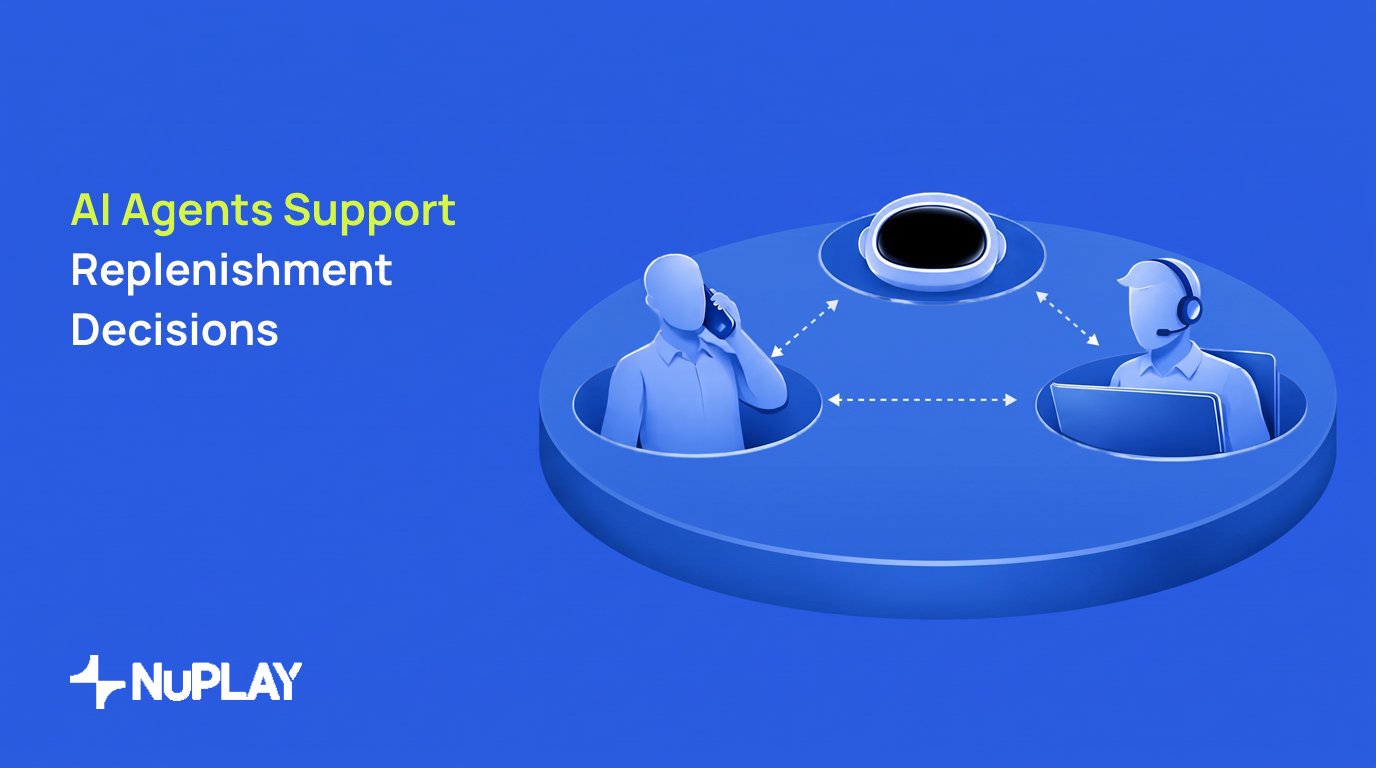

AI inventory management applies machine learning and task-specific intelligent agents to analyze supply chain signals and execute replenishment decisions. It moves repeatable back-office tasks into agent mode, where systems propose actions for human review before promotion to production.
Enterprise inventory replenishment must move beyond static forecasting models. Legacy systems degrade when supplier lead times and market signals change. Operations teams spend hours manually adjusting minimum order quantities and safety stock levels in enterprise resource planning systems. By moving the right tasks into agent mode, organizations balance real-time execution with governed oversight.
The financial stakes remain high. Static rules fail to capture supply chain complexity, leading to stockouts or overstock. Modern agentic systems automate routine tasks and integrate real-time data analysis across supply chain networks. They turn passive data into proposed actions.
What is AI Inventory Management?
AI inventory management applies machine learning models and task-specific intelligent agents to continuously analyze supply chain signals and execute replenishment decisions. It replaces manual spreadsheets with data-driven systems that monitor stock levels in real time. The primary focus is on replenishment decisions that balance carrying costs against service levels.
Traditional inventory control relies on fixed rules. A system triggers an alert when stock drops below a defined threshold. That threshold rarely adapts to sudden changes in vendor lead times, seasonal demand spikes, or transit delays. Intelligent agents monitor these variables continuously and calculate the optimal time and quantity to reorder based on current conditions.
This approach changes how supply chain teams operate. Planners review proposed actions generated by the system. The technology handles data processing. Human experts handle final approval and exception management.
How AI Agents Support Replenishment Decisions
AI agents analyze sales velocity, supplier lead times, and external signals to recommend order quantities. They pull real-time data from existing enterprise systems to build a complete picture of current stock positions and future requirements.
Workflows run in human, automated, or agent modes with approve-to-promote controls. When a replenishment trigger activates, the workflow enters agent mode. The agent evaluates multiple data points to propose a specific purchase order quantity. NuPlay AI's NuPro task-specific micro-agents execute these replenishment tasks by analyzing sales velocity and calculating order recommendations. A human manager reviews the proposal. Once approved, the system promotes the change to production.
Continuous monitoring feeds into a closed-loop improvement cycle that diagnoses issues and ships validated changes. If a vendor consistently delivers late, the agent detects the pattern and proposes an adjustment to future replenishment triggers for a planner to approve. This prevents the workflow from degrading over time.
Agents also manage sub-workflow complexity. A single replenishment decision might require checking multiple distribution centers, evaluating volume discounts, and assessing transit costs. Agents process these variables and present a recommendation that accounts for all business rules.
Key Concepts and Terminology
A replenishment trigger is the dynamic data signal that initiates a restocking workflow. Unlike static reorder points, agentic triggers adjust based on current context. The system relies on the NuPlay AI's NuContext layer to provide organizational and user memory tiers required to inform context-aware triggers.
Agent mode describes the workflow execution state where an intelligent agent processes complex reasoning tasks. It proposes actions for human review prior to promotion. This differs from basic automation, which uses fixed rules. Modern systems use techniques such as reinforcement learning and anomaly detection to identify patterns planners might miss.
The closed feedback loop improves workflows over time through five stages: Report, Diagnose, Propose, Try, and Ship. This governed change ensures the system adapts safely.
Real-World Examples and Use Cases
Inventory replenishment serves as an enterprise entry point for agentic AI because it pairs high transaction volumes with repeatable decision logic. Enterprises across sectors apply these workflows to solve operational challenges.
High-volume retail chains use agents to adjust orders daily based on promotion lift and weather data. A regional grocery chain might run a weekend promotion. The agent analyzes past performance, current stock levels, and inbound shipments, then proposes store-level allocations. Planners review and approve in minutes.
Home services companies apply the same logic to maintain parts inventory across locations. Agents monitor usage rates for thousands of parts across regions and propose transfer orders or new purchases to ensure service levels without excess carrying costs.
Financial services and insurance operations adapt similar patterns for document and supply workflows. Agents monitor consumption rates and propose replenishment orders before critical supplies run low.
Benefits and Importance of AI Inventory Management
Effective AI inventory management reduces stockouts and overstock through context-aware decisions. Inventory distortion drains enterprise margins. The path forward requires unified platforms that address root causes of poor ordering decisions.
Agentic workflows lower manual workload so teams focus on exceptions and supplier relationships. Planners no longer calculate basic reorder quantities. They negotiate terms and source alternatives. A 2025 research review found that AI-driven inventory systems reducing manual reorder calculations lets planners focus on supplier negotiation and exception handling instead of routine math - the operational shift matters more than any single benchmark number here.
This technology enables governed improvement that adapts to changing demand patterns without system rebuilds. Static deployments degrade as the business changes. NuPlay AI's NuLoop closed feedback loop ensures replenishment workflows do not degrade by constantly diagnosing issues and proposing governed updates.
The system watches every agent run. It reports outcomes, diagnoses shortfalls, proposes fixes, tests them against historical data, and ships only after human approval.
Common Misconceptions About AI Inventory Management
Many assume AI means handing over full autonomy. In practice, human sign-off remains the default for production changes. Enterprise-grade systems operate on an approve-to-promote model. The agent performs data analysis and scenario planning. A human expert reviews and approves. That oversight matters for adoption: in a 2025 inventory study, 30% of employees said they do not trust AI to deliver accurate information.
Improvement occurs through diagnosis, coverage, and governed change rather than automatic accuracy gains. The system improves because the closed feedback loop identifies edge cases, proposes logic updates, and allows managers to ship validated fixes.
Many leaders believe this technology applies only to front-line customer interactions. The most immediate return often comes from repeatable back-office workflows. Replenishment logic is highly structured, making it a strong candidate for agent mode.
Choosing an Enterprise Platform for AI Inventory Management
Enterprise buyers need platforms that handle execution, memory, and continuous improvement in one environment. Point solutions that offer only predictive analytics leave execution to human operators.
Look for unified execution, context, and improvement layers that keep agents production-ready. The platform must integrate with existing systems of record. Agents need real-time access to inventory positions, transit statuses, and vendor catalogs.
NuPlay AI enterprise platform runs enterprise workflows in production and improves them after every run through NuLoop, with agents, the systems they operate, and the context they draw on under one platform. That contrasts with static deployments that degrade as the business changes. The differentiator is the closed feedback loop.
By focusing on platforms that support human, automated, and agent modes, enterprises build resilient supply chains. They move the right work into agent mode rather than attempting to replace people.